


The connection between forest fires and climate change
Roughly 35 forest fires raged in the state of Colorado in June of 2012, obliterating homes and thousands of acres of land in the process. While these devastating fires were blazing, much of the central United States was under record-breaking heat, with some temperatures consistently reaching the triple digits.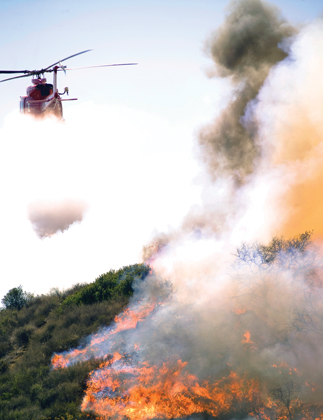
The National Climate Data Center reported that 41 heat records were broken at the time, most in Kansas, Nebraska and Colorado. Such high temperatures are typical in these areas. Many scientists have questioned if the forest fires and the heat waves tend to go hand in hand.
According to the "Heat Waves and Climate Change" report from Climate Communication, a nonprofit science and outreach project funded by the Rockefeller Brothers Fund and the ClimateWorks Foundation, as of the June forest fires, there had been nearly 10 times as many high-temperature records as low-temperature records through the midway point of 2012. In the last 10 years, high-temperature records have outnumbered low-temperature records by a two-to-one margin. This has led many people to firmly believe that the climate is growing warmer.
The prospects of global climate change have prompted the assumptions of many different ecological changes. Ecologists and scientists have said that a mere two degree change in temperature can have profound effects. Some of those effects include:
* Intense warming over land, exacerbated over the Arctic. Retreating sea ice in this area reflects less light and therefore results in less cooling.
* Ice caps and glaciers melt, causing an overall rise in sea levels.
* Rising sea levels force many coastal areas, and those already below sea level, to be covered in water.
* Although day-to-day weather may not seem to change much, when extreme weather events do occur, they will be much more intense.
* Long dry spells combined with earlier snowmelt will increase the risk of wildfires, according to Kevin Trenberth, senior scientist and head of the climate analysis division of Colorado's National Center for Atmospheric Research.
* A study published in 2007 in the journal Climate Dynamics predicted wetter winters for the northeastern United States -- with 10 to 15 percent more precipitation -- and hotter summers. Residents of the Northeast witnessed this firsthand when the 2010-2011 blizzards essentially shut down major cities like New York and Boston.
Many more people have taken notice of weather abnormalities that have occurred in the last several years. Fiercer hurricanes and other storms around the world and alterations of normal seasonal patterns have raised questions. The Natural Resources Defense Council offers that while local temperatures fluctuate naturally, over the past 50 years the average global temperature has increased at the fastest rate in recorded history. And experts think the trend is accelerating. The 10 hottest years on record have all occurred since 1990.
Scientists say that hot temperatures in Colorado are one factor that may have contributed to the forest fires. However, low levels of precipitation throughout the year and the lack of very cold nights throughout the winter may have contributed to a drying out of the forests. In essence, the forests were like stacks of kindling just waiting to go up in flames.
Dr. Steven Running, a University of Montana forest ecologist, predicts that extreme events like immense forest fires will only become more prevalent and accelerate every year as warming trends continue.