







Program urges owners to get to the 'root' of pet dental care
|
Missing visits to the dentist may lead to more serious consequences than cavities. The advanced form of gum disease that can cause tooth loss known as periodontitis is now associated with other whole-body health problems. According to the American Dental Association (ADA), cardiovascular disease, stroke and bacterial pneumonia may all result from periodontitis.
The ADA recommends adult men and women brush twice a day, eat balanced nutrition and schedule routine dental visits for professional cleanings and oral exams. What pet owners are now beginning to realize is the importance of taking care of their pets' teeth in a way similar to how they care for their own oral health.
In an ongoing effort to educate pet owners on the importance of routine dental care, Pet Dental Health Campaign (PDHC) encourages veterinary visits, dental check-ups and home care maintenance. At home options include regular brushing, routine examinations of a pet's teeth and gums and the role specialized daily balanced nutrition like Hill's® Prescription Diet® t/d® Canine and Feline brand pet foods play in good oral health. Through everyday maintenance, pet owners can help to control plaque and tartar buildup resulting in a healthier mouth and a happier life for their pets.
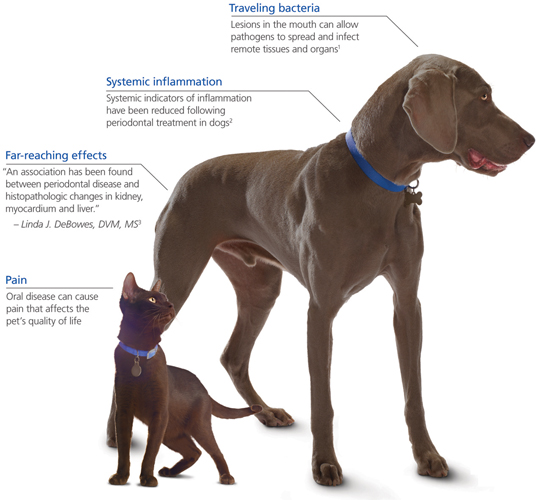
"Dogs and cats with poor oral health can develop systemic inflammation that contributes to poor general health. Systemic inflammation has the potential to affect various disease states as well as various organs such as the kidneys," says PDHC spokesperson Linda J. DeBowes, D.V.M., MS, Shoreline Veterinary Dental Clinic, Seattle, Wash. "There is an increasing awareness and belief that oral health is important for the overall health of the pet."
Hill's Pet Nutrition Inc., maker of Hill's® Prescription Diet® and Hill's® Science Diet® brand pet foods, is pleased to co-sponsor the 2009 Pet Dental Health Campaign along with the American Veterinary Medical Association, American Veterinary Dental Society (AVDS), Academy of Veterinary Dentistry, American Veterinary Dental College, Academy of Veterinary Dental Technicians and Veterinary Oral Health Council®.
Pet owners need to understand that proper oral care requires an ongoing commitment. According to the AVDS, it is estimated that more than 80 percent of dogs and cats age four and older show signs of oral disease, often indicated by bad breath, a change in eating or chewing habits, pawing at the face and mouth and depression.
"Most affected pets, however, show no signs at all. A thorough oral examination under light anesthesia combined with periodontal probing and dental x-rays is the only means of detecting the true extent of the disease and establishing a treatment plan," says Brett Beckman, DVM, FAVD, DAVDC, DAAPM, president of the American Veterinary Dental Society.
If inflammation of the gums is left untreated, the bone around the roots of teeth can deteriorate, and as the bone tissue is destroyed, teeth may become loose or fall out. Eventually, the infection can cause receding gums and tooth loss and bacteria may enter the bloodstream, potentially affecting the heart, liver and kidneys.
"Periodontitis doesn't occur overnight. Lifelong management requires professional care and client-provided home care," says Ellen I. Logan, D.V.M., Ph.D., manager, Hill's Veterinary Consultation Services. "Preventing periodontal disease will positively impact the quality of our pets' lives."
For more information on proper pet dental care, contact your veterinarian and visit PetDental.com.
1 Oral-systemic health (your oral health and overall health).
© Copyright American Dental Association 1995-2008, ADA.org.